Green tea extract and blood sugar: Glyvoryn's antioxidant powerhouse

Updated September 2026 · reviewed by the Glyvoryn Research Team. We are an independent information resource, not a medical provider, and this article is educational rather than medical advice.
Green tea extract is a concentrated form of the camellia sinensis leaf, standardised for the polyphenol antioxidants — chiefly the catechin EGCG — that have made green tea one of the most studied plants in the world for general metabolic wellness. In Glyvoryn, it is one of the headline antioxidants, riding alongside chromium and a botanical blend to support blood sugar that is already within a normal range. It supports a healthy routine; it does not treat, cure or replace medical care. A meta-analysis of randomised controlled trials examined green tea catechins, with and without caffeine, against glycaemic control in adults (Zheng et al., American Journal of Clinical Nutrition, 2013).
Why green tea extract earns its spot in a blood-sugar-support formula.
- What it is
- A concentrated camellia sinensis leaf extract, rich in polyphenol antioxidants, especially the catechin EGCG.
- Why it is in Glyvoryn
- Green tea has one of the longest study histories for general metabolic wellness of any everyday plant, which is why it sits in the 200 mg botanical blend.
- What the evidence shows
- Promising but mixed: green tea polyphenols are researched for normal carbohydrate metabolism, yet results vary and are far from a cure.
- How to think about it
- As antioxidant support for a whole-diet, whole-lifestyle routine — not a stand-alone treatment for any condition.
Few ingredients are as familiar, or as quietly well-credentialed, as green tea. People have drunk it for over a thousand years, and researchers have spent decades cataloguing the compounds inside the leaf. This article explains what green tea extract is, what its polyphenols and EGCG do, what the science honestly shows for blood sugar, and how the extract fits into the wider Glyvoryn formula.
What is green tea extract, exactly?
Green tea extract is the concentrated essence of unfermented camellia sinensis leaves, processed so that the plant's polyphenol antioxidants are captured in a small, consistent dose. Where black tea is oxidised, green tea is quickly steamed or pan-fired after harvest, a step that preserves the delicate catechins that would otherwise break down. An extract simply takes that leaf and standardises it, so each serving delivers a predictable amount of the studied compounds rather than the variable brew you get from steeping a bag for an uncertain number of minutes. A later systematic review and meta-analysis of randomised controlled trials looked at green tea consumption and glycaemic control (Xu et al., Nutrition & Metabolism, 2020).
The practical upside is consistency. A home-brewed cup varies in strength with the leaf, water temperature and steep time, whereas a standardised extract in a formula like Glyvoryn contributes the same polyphenol dose day after day — without asking you to drink several cups of caffeinated tea to get there.
What are green tea polyphenols and EGCG?
Green tea polyphenols are the plant antioxidant compounds responsible for most of green tea's studied activity, and the single most researched of them is EGCG, short for epigallocatechin gallate. Polyphenols are a broad family of molecules that plants make partly to protect themselves; in the human diet they act as antioxidants, meaning they help neutralise reactive molecules called free radicals. Green tea is unusually rich in a polyphenol subgroup called catechins, and EGCG is the most abundant and best-studied catechin of them all.
Why is EGCG the star of the leaf?
EGCG is the catechin that carries most of green tea's antioxidant reputation, appearing in the great majority of studies on the plant. Researchers keep returning to it because it is both plentiful and biologically active, which is why "green tea extract" and "EGCG" are often mentioned in the same breath. When a supplement lists green tea as an antioxidant, EGCG and its catechin relatives are doing most of the talking.
How does camellia sinensis become an antioxidant source?
All true tea — green, black, oolong and white — comes from one plant, camellia sinensis, and the differences come down to how the leaves are processed after picking. Because green tea skips the long oxidation that darkens black tea, it retains a higher proportion of its original catechins, and that is precisely why green tea, rather than black, is the version prized as an antioxidant source. Concentrating those catechins into an extract is the final step that turns a garden shrub into a measured ingredient.
What does the research say about green tea and blood sugar?
Green tea has one of the longest research histories of any everyday plant for general metabolic wellness, but the evidence for blood sugar specifically is promising rather than settled. Population studies have noted that regular green tea drinkers tend to have favourable metabolic profiles, and lab work has explored how catechins interact with carbohydrate-processing pathways. Human trials, however, are mixed: some report small favourable shifts in fasting glucose, others show little change, and differences in dose and study length make comparison hard.
Is the evidence strong, or still preliminary?
Honestly, it is preliminary, and any responsible summary has to say so. The most accurate framing is that green tea polyphenols are an active and interesting area of metabolic research, not a proven blood-sugar remedy. National health bodies describe green tea as generally safe and widely studied while stopping well short of endorsing it as a treatment for diabetes or any other disease. That is the right level of enthusiasm: real scientific interest, tempered by the honest limits of the current data.
This is why Glyvoryn positions green tea as antioxidant support within a broader routine rather than a headline "cure". The compounds are well studied and the safety record for ordinary intakes is reassuring, but the extract earns its place as one supporting player, not a magic bullet. For the bigger picture, see our guide to supporting healthy blood sugar naturally.

Green tea, in a once-daily dropper
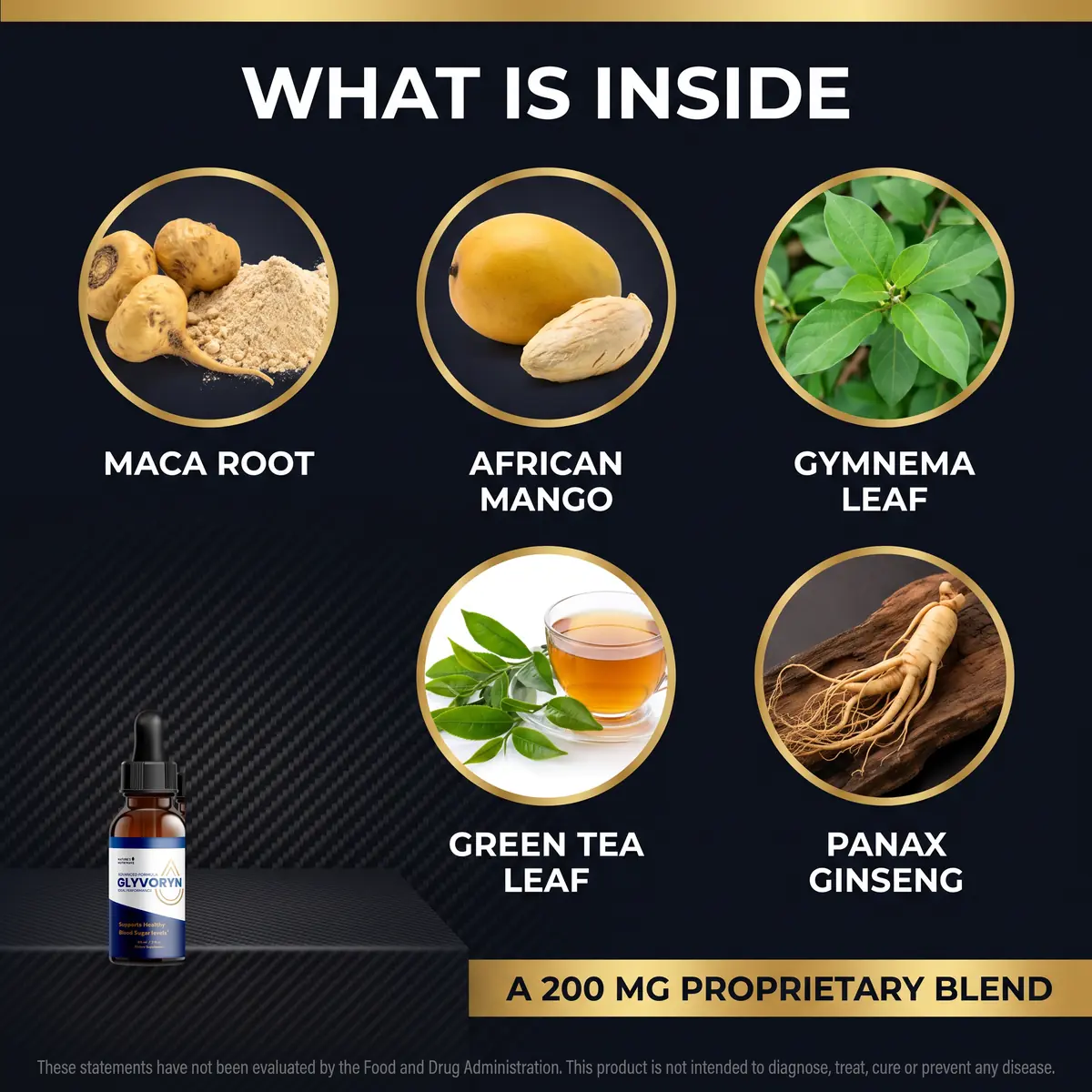
Glyvoryn pairs chromium with a 200 mg botanical blend — green tea, gymnema, maca, African mango and panax ginseng — as fast liquid drops. See the exact dose in Glyvoryn and today's best-value bundle at $49 per bottle, with free U.S. shipping and a 60-day guarantee. As always, the umbrella view of medicinal plants for glycaemic control is the honest frame for a single ingredient inside a mixed formula (Willcox et al., Frontiers in Pharmacology, 2021).
Check today's Glyvoryn pricing — from $49/bottleHow does green tea extract fit into Glyvoryn?
In Glyvoryn, green tea extract is one strand of a 200 mg proprietary botanical blend that also carries gymnema, maca, African mango and panax ginseng, alongside chromium picolinate. The idea is not to lean on a single ingredient but to combine well-studied nutrients that each play a supporting role. Green tea's job is antioxidant support — the polyphenol contribution that complements chromium's role in normal macronutrient metabolism and gymnema's long tradition in blood-sugar wellness.
| Ingredient | Category | Supporting role in the blend |
|---|---|---|
| Green tea extract | Polyphenol antioxidant | A rich source of catechins such as EGCG; widely studied for general metabolic wellness. |
| Chromium (picolinate) | Essential trace mineral | Contributes to normal macronutrient metabolism — the everyday processing of carbs, fats and protein. |
| Gymnema | Ayurvedic botanical | Known as gurmar, or “sugar destroyer”; one of the most researched herbs for blood-sugar wellness. |
| African mango | Fibre-rich seed | A traditional West African food, popular in fibre- and metabolism-focused formulas. |
| Panax ginseng | Adaptogen | A storied tonic used to support resilience and everyday energy. |
Because it is delivered as liquid drops rather than a pressed pill, the blend is designed to be simple to take once a day. For a closer look at two of its other stars, read our companion guide to chromium and gymnema for blood sugar, or open the full ingredients section on the homepage.
Green tea extract versus a cup of tea: what is the difference?
A standardised extract and a brewed cup deliver the same family of compounds in very different packages, and each has its place. Brewing green tea is a pleasant daily ritual, but the polyphenol dose swings with every steep; an extract trades ritual for consistency, contributing a predictable amount of catechins in one step and without a large caffeine load. The table below lines up the everyday trade-offs.
| Consideration | Brewed green tea | Standardised extract (as in Glyvoryn) |
|---|---|---|
| Polyphenol consistency | Varies by leaf, temperature and steep time | Standardised, same contribution each serving |
| Caffeine | Adds up across several cups | Minimal in a small blend dose |
| Effort | Boil, steep, time, repeat | One dropper, once a day |
| Ritual & enjoyment | High — a genuine pleasure | Low — it is a supplement step |
| Best thought of as | A healthy daily drink | Antioxidant support inside a wider blend |
Neither replaces the other, and there is no rule against enjoying both. Many people keep drinking their favourite green tea for the ritual and let the extract in a formula like Glyvoryn cover the consistent polyphenol contribution.

Is green tea extract safe, and who should be careful?
For most healthy adults, green tea and modest amounts of its extract are well tolerated, which is part of why the plant is so widely used. The caveat is dose: very high, isolated doses of concentrated extract have on rare occasions been linked to liver concerns, so a sensible amount within a balanced blend is preferable to mega-dosing a stand-alone product. Because green tea contains some caffeine, people sensitive to stimulants may prefer it earlier in the day.
As with any supplement, a short conversation with your doctor is wise if you are pregnant or nursing, under 18, take any medication — especially glucose-lowering medicine — have a liver condition, or manage a diagnosed illness. Green tea extract is a support for blood sugar already within a normal range, not a substitute for medical care, and it is not intended to diagnose, treat, cure or prevent any disease.
Frequently asked questions
What is green tea extract?
Green tea extract is a concentrated form of camellia sinensis leaf, standardised for its polyphenol antioxidants, especially the catechin EGCG. It delivers the studied compounds of green tea in a small, consistent dose without the caffeine load of many cups of brewed tea.
Does green tea extract help blood sugar?
Green tea has a long study history for general metabolic wellness, and its polyphenols are being researched for their role in normal carbohydrate metabolism. Evidence is mixed and mostly preliminary, so green tea extract is best viewed as antioxidant support for a healthy routine, not a treatment for any condition.
What are green tea polyphenols and EGCG?
Polyphenols are plant antioxidant compounds; in green tea the main group is catechins, and the most studied catechin is epigallocatechin gallate, or EGCG. These molecules are the reason green tea is one of the most researched plants for metabolic wellness.
How much green tea extract is in Glyvoryn?
Green tea is part of Glyvoryn's 200 mg proprietary botanical blend, which also includes gymnema, maca, African mango and panax ginseng, alongside chromium picolinate. The blend is delivered as once-daily liquid drops rather than a capsule.
Is green tea extract safe?
For most healthy adults, green tea and modest amounts of its extract are well tolerated. Very high isolated doses have rarely been linked to liver concerns, so a sensible blend dose is preferable. If you are pregnant, nursing, take medication or have a liver condition, ask your doctor first.
Should I drink green tea or take an extract?
Both have a place. Brewed green tea is a pleasant, hydrating daily habit, while a standardised extract offers a consistent polyphenol dose in one step. In Glyvoryn, green tea extract simply lets the same well-studied compounds ride along with the rest of the blood-sugar-support blend.
See the exact green tea dose in Glyvoryn →
Glyvoryn is a dietary supplement, not a treatment for any medical condition. These statements have not been evaluated by the Food and Drug Administration. This product is not intended to diagnose, treat, cure or prevent any disease. Always consult a qualified healthcare professional about your individual needs.
References & further reading
- National Center for Complementary and Integrative Health (NCCIH). Green Tea. nccih.nih.gov/health/green-tea
- National Institutes of Health, Office of Dietary Supplements. Dietary Supplements for Weight Loss — Green Tea. ods.od.nih.gov/factsheets/WeightLoss-HealthProfessional
- Examine.com. Green Tea Catechins (EGCG) — evidence-based summary. examine.com/supplements/green-tea-catechins
- National Institutes of Health, Office of Dietary Supplements. Chromium — Fact Sheet for Health Professionals. ods.od.nih.gov/factsheets/Chromium-HealthProfessional
- Zheng XX, et al. Effects of green tea catechins with or without caffeine on glycemic control in adults: a meta-analysis of randomized controlled trials. American Journal of Clinical Nutrition, 2013. PMID 23426037
- Xu R, et al. Effects of green tea consumption on glycemic control: a systematic review and meta-analysis of randomized controlled trials. Nutrition & Metabolism, 2020. PMID 32670385
- Willcox ML, et al. Effectiveness of medicinal plants for glycaemic control in type 2 diabetes: an overview of meta-analyses of clinical trials. Frontiers in Pharmacology, 2021. PMID 34899340
These references describe the ingredients and habits in general terms and do not constitute evidence that any product treats, cures or prevents any condition.
Keep reading: how chromium and gymnema work · the best foods to balance blood sugar · back to the Glyvoryn blog · read the full Glyvoryn review.