Best foods to balance blood sugar: a Glyvoryn guide

Updated September 2026 · reviewed by the Glyvoryn Research Team. We are an independent information resource, not a medical provider, and this article is educational rather than medical advice.
The best foods to balance blood sugar are whole, minimally processed foods rich in fibre, protein or healthy fat — non-starchy vegetables, legumes, whole grains, nuts, quality protein and whole fruit — because they slow digestion so glucose enters the blood as a gentler wave rather than a sharp spike. A randomised cross-over study found that eating vegetables first, regardless of eating speed, reduced post-meal blood glucose and insulin in young healthy women (Imai et al., Nutrients, 2023).
What to put on the plate for steadier blood sugar.
- The principle
- Favour foods that digest slowly — high in fibre, protein or fat — and go easy on refined carbohydrates and liquid sugar.
- Top groups
- Non-starchy vegetables, beans and lentils, whole intact grains, nuts and seeds, lean protein, and whole fruit like berries.
- Plate method
- Half the plate vegetables, a quarter protein, a quarter whole carbohydrates.
- Order trick
- Eat vegetables and protein before the starch to blunt the after-meal rise.
- Drinks
- Water, unsweetened tea and coffee; limit soda and juice.
No single food balances blood sugar on its own — it is the overall pattern that matters. Still, some foods make steadiness easy and others make it hard, and knowing the difference turns the grocery aisle into your simplest tool. Below is a practical, group-by-group list, two quick-reference tables, and a sample day you can copy. It pairs naturally with our guide to supporting healthy blood sugar naturally.
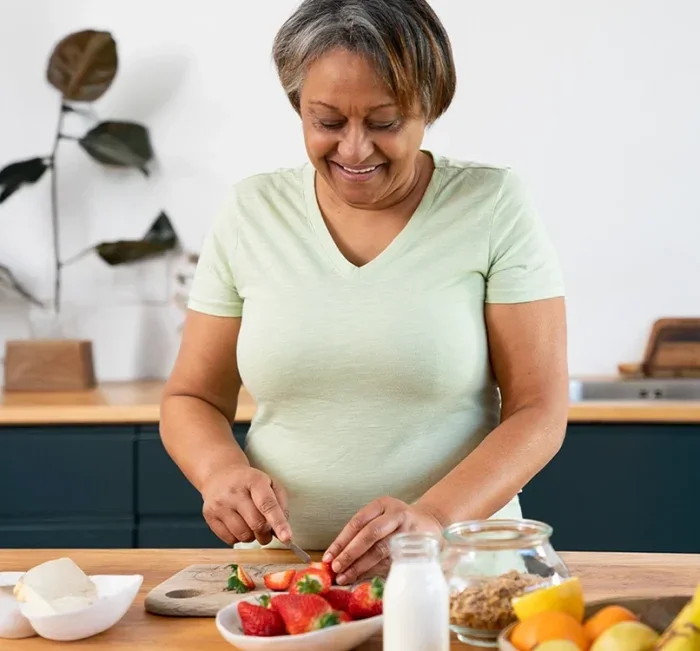
What makes a food good for balanced blood sugar?
A food that is good for balanced blood sugar is simply one that releases its energy slowly. Three properties do most of the work: fibre, which physically slows digestion; protein, which is filling and has little direct effect on glucose; and healthy fat, which further slows how fast a meal leaves the stomach. Whole foods keep these intact, while refining strips fibre away and speeds everything up.
Two useful shorthands are glycemic index (how fast a food raises glucose) and glycemic load (which also accounts for portion). You do not need to memorise numbers — choosing whole over refined and pairing carbohydrates with fibre, protein or fat gets you most of the benefit automatically. A systematic review and meta-analysis of randomised controlled trials examined low-glycaemic-index dietary patterns against glycaemic control and cardiometabolic risk factors (Chiavaroli et al., The BMJ, 2021).
The best foods to balance blood sugar, by group
Non-starchy vegetables
Leafy greens, broccoli, peppers, courgette, cauliflower, mushrooms and tomatoes are low in calories and rich in fibre, so they add volume and slow a meal with almost no glucose impact. Aim to fill half your plate here. The habit-level version of that is in how to lower blood sugar naturally.
Beans, lentils and chickpeas
Legumes are a standout: fibre and slow-digesting plant protein in one package. Adding beans to a meal lowers its overall glycemic load and keeps you full for hours.
Whole, intact grains
Oats, barley, quinoa, buckwheat and brown rice keep their bran and germ, so they digest far more gently than white flour. “Intact” is the key word — whole grains ground into fine flour behave more like refined ones.
Nuts, seeds and healthy fats
Almonds, walnuts, chia, flax, olive oil and avocado bring fat and fibre that flatten a meal’s glucose curve. A small handful of nuts is one of the easiest steady snacks going.
Quality protein
Eggs, fish, poultry, tofu, tempeh and Greek yoghurt have minimal direct effect on blood sugar and make meals more satisfying. Anchoring each meal with protein is one of the highest-value habits on this list.
Whole fruit, especially berries
Berries, cherries, apples, pears and citrus deliver vitamins and fibre with a gentler sugar load. Eat fruit whole rather than juiced, and pair it with nuts or yoghurt to soften the rise.
See how Glyvoryn supports your food routine →
A glycemic-impact table you can scan
This table groups everyday foods by their typical effect on blood sugar and offers a steadier swap for the fast movers.
| Food | Typical blood-sugar impact | Steadier swap |
|---|---|---|
| White bread, white rice | High — fast spike | Whole-grain sourdough, quinoa, barley |
| Sugary cereal | High — fast spike | Rolled oats with nuts and berries |
| Fruit juice, soda | High — liquid sugar | Whole fruit; water or unsweetened tea |
| Potato crisps | Medium-high | Nuts, seeds or veg with hummus |
| Beans, lentils | Low — slow release | Already an ideal choice |
| Leafy greens, broccoli | Very low | Already an ideal choice |

Which foods should you eat less often?
Balancing blood sugar is less about banned foods and more about frequency and portion. The fastest movers are the refined and liquid ones: white bread, pastries, sugary cereals, sweets, and above all sugary drinks, where fibre-free sugar reaches the blood almost immediately. Enjoy them occasionally, keep portions modest, and pair them with something slower — the goal is a gentler overall pattern, not perfection.

How do you build a blood-sugar-friendly plate?
The plate method turns all of the above into a picture you can build without weighing anything: half the plate non-starchy vegetables, a quarter lean protein, and a quarter whole, intact carbohydrates, with a little healthy fat for flavour and fullness. Then use meal order — vegetables and protein first, starch last — to blunt the spike, and finish larger meals with a short walk.
A sample day of balanced meals
Here is one simple day that puts the principles together. Treat it as a template, not a prescription, and adjust portions to your own needs.
| Meal | Example | Why it works |
|---|---|---|
| Breakfast | Rolled oats with chia, walnuts and berries | Fibre and fat slow the morning rise |
| Lunch | Lentil and vegetable bowl with olive oil | Slow-release protein and fibre |
| Snack | Greek yoghurt with a few almonds | Protein keeps you steady until dinner |
| Dinner | Salmon, greens, then a small portion of quinoa | Protein and veg first, starch last |
| Drink | Water or unsweetened green tea | No free sugars; polyphenol antioxidants |

Round out your routine
Glyvoryn is a once-daily dropper pairing chromium with a 200 mg botanical blend that includes fibre-rich African mango. The six-bottle bundle is best value at $49 per bottle, with free U.S. shipping and a 60-day guarantee.
Order Glyvoryn — from $49/bottle
Where does a botanical supplement fit?
Food comes first, always. A supplement is a top-up, not a replacement for a balanced plate. That said, several nutrients echo the slow-release theme of good food: chromium contributes to normal macronutrient metabolism, gymnema has a long tradition in blood-sugar wellness, and African mango is a fibre-rich seed. Glyvoryn combines these as liquid drops — see the full, transcribed ingredient list, or read how chromium and gymnema work. Fibre has the strongest evidence of anything on the plate: a systematic review and meta-analyses examined dietary fibre and whole grains in diabetes management (Reynolds et al., PLoS Medicine, 2020).
Frequently asked questions
What are the best foods to balance blood sugar?
The best foods to balance blood sugar are whole, minimally processed and rich in fibre, protein or healthy fat: non-starchy vegetables, beans and lentils, whole intact grains, nuts and seeds, eggs, fish and other lean proteins, and whole fruit such as berries. These slow digestion so glucose enters the blood as a gentler wave.
Which fruits are best for blood sugar?
Whole fruits with more fibre and lower sugar density are the steadiest choices: berries, cherries, apples, pears and citrus. Eating fruit whole rather than as juice keeps the fibre intact, and pairing it with nuts or yoghurt blunts the rise further. Portion still matters, but whole fruit belongs in a balanced diet.
Are carbohydrates bad for blood sugar?
No. Carbohydrates are not inherently bad; the type and context matter most. Refined carbohydrates digest quickly and spike glucose, while whole, fibre-rich carbohydrates such as oats, beans and vegetables release sugar slowly. Keeping portions sensible and pairing carbohydrates with protein or fat keeps them part of a balanced plate.
Does eating vegetables first really help?
Yes. Research on meal sequencing shows that eating vegetables and protein before the starchy part of a meal leads to a lower rise in blood glucose afterward. The fibre and protein slow how quickly the starch is digested, so a simple change in order can meaningfully flatten the after-meal spike.
What drinks help balance blood sugar?
Water, sparkling water, unsweetened tea and black coffee are the steadiest drinks because they add no free sugars. Green tea is a rich source of polyphenol antioxidants and has a long history in wellness traditions. Sugary sodas and juices are best limited, since liquid sugar reaches the blood quickly.
Can foods alone keep blood sugar balanced?
Food is the foundation, but movement, sleep and stress also shape blood sugar, so the best results come from combining them. Some people also add well-studied nutrients such as chromium and gymnema as a support. None of this is a treatment for any disease, and anyone on medication should consult a doctor.
Try Glyvoryn risk-free for 60 days →
Glyvoryn is a dietary supplement, not a treatment for any medical condition. These statements have not been evaluated by the Food and Drug Administration. This product is not intended to diagnose, treat, cure or prevent any disease.
References & further reading
- National Institutes of Health, Office of Dietary Supplements. Chromium — Fact Sheet for Health Professionals. ods.od.nih.gov/factsheets/Chromium-HealthProfessional
- National Center for Complementary and Integrative Health (NCCIH). Diabetes and Dietary Supplements. nccih.nih.gov/health/diabetes-and-dietary-supplements
- National Center for Complementary and Integrative Health (NCCIH). Green Tea. nccih.nih.gov/health/green-tea
- Shukla AP, et al. The impact of food order on postprandial glycaemic excursions in prediabetes. Diabetes, Obesity and Metabolism, 2019. PMID 30101510
- Examine.com. Irvingia gabonensis (African Mango). examine.com/supplements/irvingia-gabonensis
- Chiavaroli L, et al. Effect of low glycaemic index or load dietary patterns on glycaemic control and cardiometabolic risk factors in diabetes: systematic review and meta-analysis of randomised controlled trials. The BMJ, 2021. PMID 34348965
- Reynolds AN, et al. Dietary fibre and whole grains in diabetes management: systematic review and meta-analyses. PLoS Medicine, 2020. PMID 32142510
- Imai S, et al. Eating vegetables first regardless of eating speed has a significant reducing effect on postprandial blood glucose and insulin in young healthy women: randomized controlled cross-over study. Nutrients, 2023. PMID 36904173
These references describe foods and ingredients in general terms and do not constitute evidence that any product treats, cures or prevents any condition.
Keep reading: how to support healthy blood sugar naturally · how chromium and gymnema work · back to the blog · homepage.