What is reactive low blood sugar? A Glyvoryn guide to the post-meal crash

Updated September 2026 · reviewed by the Glyvoryn Research Team. We are an independent information resource, not a medical provider, and this article is educational rather than medical advice.
Reactive low blood sugar — also called reactive hypoglycemia — is a dip in blood glucose that happens within roughly one to four hours after eating, rather than during fasting, and it is thought to follow an oversized insulin response to a fast-digesting meal that pushes glucose lower than the body intended. The clinical description of the phenomenon is set out in a review of postprandial reactive hypoglycemia (Brun et al., Diabetes & Metabolism, 2000).
The post-meal crash, in plain terms.
- What it is
- A drop in blood glucose one to four hours after eating — the opposite timing of a fasting low.
- What drives it
- Fast-digesting, refined-carb meals that can trigger an insulin overshoot and a rebound low.
- How it feels
- Shakiness, hunger, irritability, sweating and a sudden craving for something sweet.
- What helps
- Balanced plates — carbs paired with protein, fibre and fat — plus no long gaps between meals.
For most adults in a normal range, the after-meal crash is mild, self-correcting and shaped more by what and when they eat than by any single illness. This guide explains the pattern in plain language, lists the usual triggers, and shows where a steady daily routine — and, optionally, a supplement like Glyvoryn — may fit. It pairs naturally with our guide to steadying blood sugar after meals. For a sense of what ordinary glucose variability looks like, a multicentre study recorded continuous glucose monitoring profiles in healthy non-diabetic participants (Shah et al., Journal of Clinical Endocrinology & Metabolism, 2019).

What is reactive low blood sugar, exactly?
Reactive low blood sugar is a below-normal glucose reading that appears in the window after a meal, as a reaction to that meal, rather than because you have gone too long without food. The word “reactive” is the key: the dip is a response to eating. Clinicians usually reserve a formal label for confirmed low readings paired with symptoms that ease when glucose is restored — a pattern sometimes called Whipple’s triad — which is why self-diagnosis from feelings alone is unreliable. The size of the initial spike is partly within your control: a clinical study showed that food order changes postprandial glycaemic excursions in prediabetes (Shukla et al., Diabetes, Obesity and Metabolism, 2019).
The leading explanation is timing. A meal rich in fast-digesting carbohydrate sends glucose up quickly; the pancreas answers with insulin; and in some people that insulin arrives a little too late, so glucose keeps falling past the comfortable middle. The result is a short, uncomfortable trough before the body rebalances.
How is reactive hypoglycemia different from a fasting low?
Reactive hypoglycemia and fasting hypoglycemia differ mainly by timing. A fasting low shows up when you have not eaten for many hours — overnight, or after skipping meals — and can point to something that needs medical attention. A reactive low, by contrast, clusters in the one-to-four-hour window after eating and, in otherwise healthy adults, is usually tied to meal composition. Because the two are managed differently, only testing can tell them apart.
What does a post-meal crash feel like?
A post-meal crash typically feels like a sudden wave of shakiness, sweating, hunger, irritability and foggy thinking that lands a couple of hours after eating and eases once you eat again. These are the body’s early-warning signals as it works to nudge glucose back up, and the pull toward something sweet is part of that same reflex. The catch is that every one of these sensations is non-specific — stress, poor sleep and simple hunger produce the same feelings — so they are a prompt to look closer, not proof of hypoglycemia. The habit-level version of that is in how to lower blood sugar naturally.
| Common sensation | Why it may happen | Also caused by |
|---|---|---|
| Shakiness, trembling | Adrenaline released as glucose dips | Caffeine, anxiety |
| Sweating, clamminess | Stress-hormone response | Heat, nerves |
| Sudden hunger, sweet craving | Body signalling for fast fuel | Skipped meals, habit |
| Irritability, low mood | Brain sensitive to falling glucose | Tiredness, stress |
| Difficulty concentrating | Glucose is the brain’s main fuel | Poor sleep, dehydration |
If crashes are frequent, severe, or come with fainting or confusion, that is a reason to see a clinician rather than to adjust your diet alone.
What causes low blood sugar after eating?
Low blood sugar after eating is most often linked to meals that digest quickly — refined carbohydrates and added sugar with little to slow them down. Below are the contributors researchers and clinicians point to most often, though for any individual the exact mix is worth confirming with a professional.
Refined carbohydrates and the insulin overshoot
The most common driver is a meal built around fast carbohydrate: white bread, sugary drinks, pastries or a large plate of white rice with little protein or fibre. Glucose climbs fast, insulin rises to match, and because there is nothing in the meal to slow digestion, the fall can overshoot the mark. This is why the same person can feel fine after a balanced lunch and crash after a sugary one.
Meal timing, protein and fibre
Long gaps between meals set up bigger swings, because you arrive at the next meal very hungry and tend to eat fast carbohydrate quickly. Eating on a reasonably regular rhythm, and anchoring meals with protein, flattens both the peak and the rebound.
Other contributors
Alcohol — especially on an empty stomach — can blunt the liver’s ability to release glucose and deepen a dip. Prior stomach surgery can speed how fast food empties into the gut. And for a minority, early insulin resistance shows up as post-meal instability. None of these is something to diagnose yourself; they are reasons the pattern varies so much from person to person.
See the exact dose in Glyvoryn →
How is reactive low blood sugar checked?
Reactive low blood sugar is confirmed not by symptoms but by measuring glucose while symptoms are happening. Because the feelings overlap with so many everyday states, clinicians look for the combination of low readings, matching symptoms, and relief when glucose is restored. The practical takeaway for a healthy adult is simple: track the pattern, bring it to a professional, and do not leap to a label on your own.
How do you steady blood sugar after meals?
You steady blood sugar after meals by building plates that digest slowly and by keeping a sensible rhythm to your day. The same habits that flatten a glucose spike also soften the rebound low that follows it, which is why the fix for a post-meal crash looks a lot like ordinary balanced eating. The table below turns the principle into concrete swaps.
| Habit | Fast-crash version | Steadier version |
|---|---|---|
| Breakfast | Sugary cereal or pastry alone | Eggs or oats with nuts and berries |
| Lunch | White-bread sandwich, soda | Whole grain, protein, salad, water |
| Snacks | Sweets or a sugary coffee | Yoghurt, nuts, or fruit with protein |
| Meal order | Starch first, on an empty stomach | Vegetables and protein before starch |
| After eating | Sit down straight away | A 10–15 minute walk |
| Timing | Long gaps, then a big fast meal | Regular meals, no marathon gaps |
Beyond the plate, the quieter levers matter: consistent sleep, managed stress and regular movement all shape how the body handles glucose. None of this requires perfection. For a deeper routine, see how to support healthy blood sugar naturally.


Add steady support to your routine
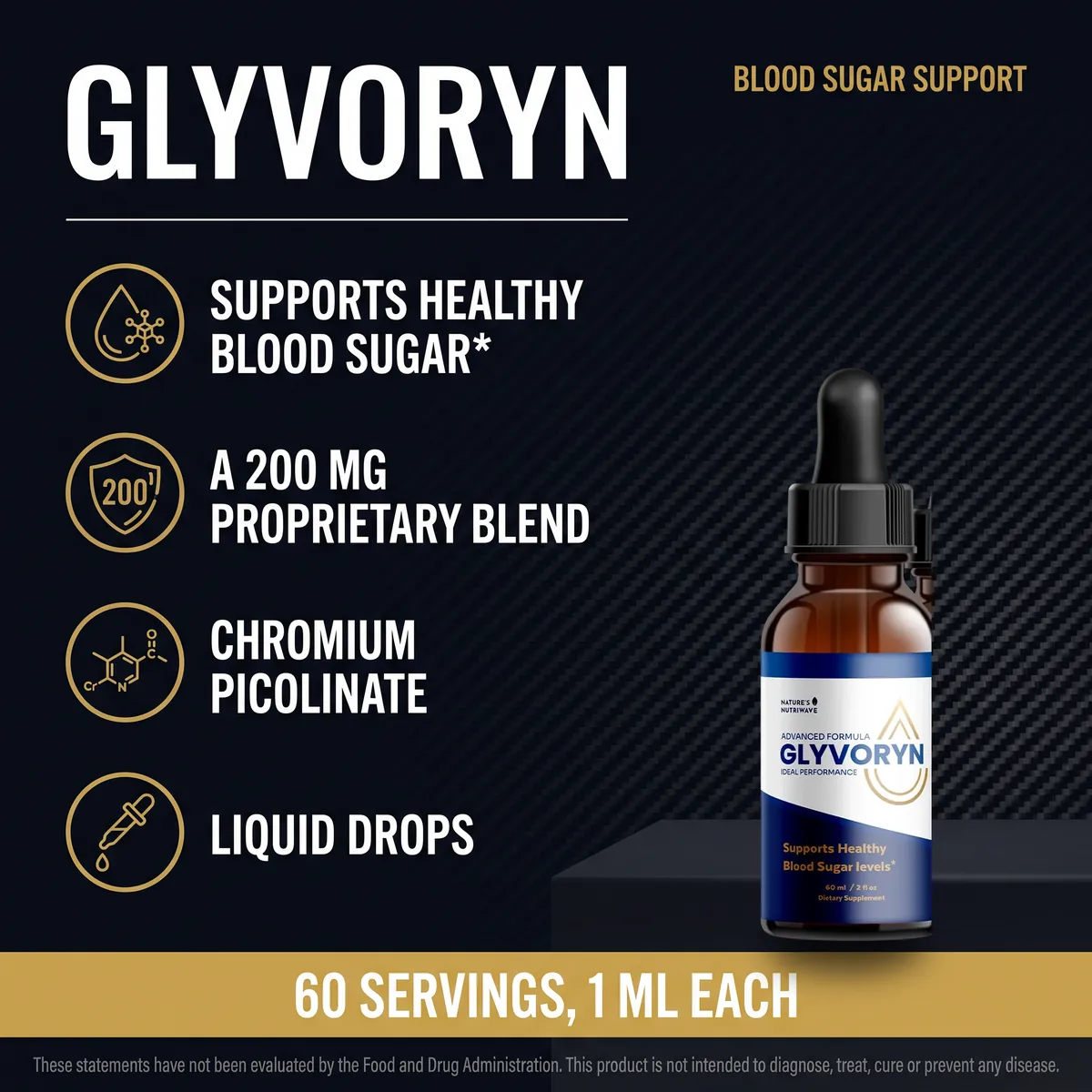
Glyvoryn is a once-daily dropper pairing chromium — which contributes to normal macronutrient metabolism — with a 200 mg botanical blend. It is a top-up to balanced meals, not a treatment. The six-bottle bundle is best value at $49 per bottle, with free U.S. shipping and a 60-day guarantee.
Check today’s Glyvoryn pricing — from $49/bottleWhere does Glyvoryn fit for reactive low blood sugar?
Glyvoryn fits as everyday support around a steady routine — never as a cure or treatment for reactive low blood sugar. Food and habits do the heavy lifting; a supplement is a top-up for people who want one. Several nutrients in the formula echo the slow-and-steady theme: chromium contributes to normal macronutrient metabolism, gymnema has a long tradition in blood-sugar wellness, and fibre-rich African mango reflects the same slow-release idea as good food. You can read the full, transcribed ingredient list on our Glyvoryn review, or compare gymnema and berberine.
If your crashes are frequent or severe, no drop of anything replaces a conversation with a doctor. But for an adult in a normal range who has already tidied up their meals, a once-daily routine can be a small, consistent anchor.

Frequently asked questions
What is reactive low blood sugar?
Reactive low blood sugar, also called reactive hypoglycemia, is a dip in blood glucose that happens within about one to four hours after eating, rather than during fasting. It is thought to follow an oversized insulin response to a fast-digesting meal, which pushes glucose lower than the body intended. In people without diabetes it is usually mild and self-correcting.
What does a post-meal crash feel like?
A post-meal crash often feels like sudden shakiness, sweating, hunger, irritability, difficulty concentrating and a strong urge for something sweet, coming on a couple of hours after a meal. Symptoms typically ease once you eat again. Because these feelings are non-specific, they are not proof of hypoglycemia on their own and are worth discussing with a clinician if they are frequent.
What causes low blood sugar after eating?
Low blood sugar after eating is most often linked to meals high in refined carbohydrates and sugar, which are digested quickly and can trigger an insulin overshoot. Skipping protein and fibre, large gaps between meals, alcohol, and prior stomach surgery can all play a role. In most healthy adults the pattern is driven by meal composition rather than any single disease.
How do you steady blood sugar after meals?
You steady blood sugar after meals by building plates that digest slowly: pair carbohydrates with protein, fibre and healthy fat, favour whole over refined foods, and avoid long gaps between meals. Eating vegetables and protein before starch, and taking a short walk afterward, both blunt the rise and the rebound. Consistent sleep and stress habits help too.
Is reactive hypoglycemia the same as diabetes?
No. Reactive hypoglycemia is a pattern of low glucose after eating and is not the same as diabetes, which involves persistently high glucose. The two can be confused because both cause energy swings, and some people with early insulin resistance report post-meal lows. Only testing ordered by a clinician can sort out what is actually happening.
Can a supplement fix reactive low blood sugar?
No supplement is a fix or a treatment for reactive low blood sugar, and Glyvoryn does not claim to be one. A daily routine built on balanced meals is the foundation. Some people add well-studied nutrients such as chromium, which contributes to normal macronutrient metabolism, as general support. Anyone with frequent or severe symptoms should see a doctor rather than self-treat.
Try Glyvoryn risk-free for 60 days →
Glyvoryn is a dietary supplement, not a treatment for any medical condition. These statements have not been evaluated by the Food and Drug Administration. This product is not intended to diagnose, treat, cure or prevent any disease.
References & further reading
- Mayo Clinic. Reactive hypoglycemia: What can I do? mayoclinic.org/diseases-conditions/diabetes/expert-answers/reactive-hypoglycemia
- MedlinePlus, U.S. National Library of Medicine. Low blood sugar — Hypoglycemia. medlineplus.gov/hypoglycemia.html
- National Institutes of Health, Office of Dietary Supplements. Chromium — Fact Sheet for Health Professionals. ods.od.nih.gov/factsheets/Chromium-HealthProfessional
- National Center for Complementary and Integrative Health (NCCIH). Diabetes and Dietary Supplements. nccih.nih.gov/health/diabetes-and-dietary-supplements
- Brun JF, et al. Postprandial reactive hypoglycemia. Diabetes & Metabolism, 2000. PMID 11119013
- Shah VN, et al. Continuous glucose monitoring profiles in healthy nondiabetic participants: a multicenter prospective study. Journal of Clinical Endocrinology & Metabolism, 2019. PMID 31127824
- Shukla AP, et al. The impact of food order on postprandial glycaemic excursions in prediabetes. Diabetes, Obesity and Metabolism, 2019. PMID 30101510
These references describe the condition and ingredients in general terms and do not constitute evidence that any product treats, cures or prevents any condition.
Keep reading: how to steady blood sugar after meals · supporting healthy blood sugar naturally · the full Glyvoryn review · back to the blog.