How to steady blood sugar after meals with Glyvoryn

Updated September 2026 · reviewed by the Glyvoryn Research Team. We are an independent information resource, not a medical provider, and this article is educational rather than medical advice.
To steady blood sugar after meals means using the order you eat, a short burst of movement and a few repeatable habits to soften the sharp rise and steep crash that can follow a carbohydrate-heavy plate. The most powerful levers are free and immediate — eat vegetables and protein first, then walk for ten minutes — and a daily support routine, where a formula like Glyvoryn can play a part, keeps the effect steady over the long run rather than meal by meal. Food order alone changes the curve, as a clinical study of postprandial glycaemic excursions in prediabetes demonstrated (Shukla et al., Diabetes, Obesity and Metabolism, 2019).
How to soften the post-meal glucose swing, in one place.
- The goal
- Flatten the after-eating spike so energy stays even instead of surging and crashing an hour later.
- Fastest lever
- A 10-to-15-minute walk after your biggest meal — working muscles pull glucose from the blood most eagerly right after eating.
- Free trick
- Change the order, not the plate: eat vegetables and protein before the starch to lower the rise that follows.
- Where Glyvoryn fits
- A once-daily dropper of chromium plus a botanical blend gives your routine steady everyday support — not a treatment for any disease.
Almost everyone has felt post-meal glucose in motion: the heavy lunch that leaves you foggy by three, or the cravings that arrive not long after a sweet breakfast. Post-meal glucose — the rise in blood sugar in the one to two hours after eating — is where the biggest, most controllable swings happen. The good news is that the habits that soften it are small, and they stack. This how-to walks through the exact meal-timing tips, movement and routine that make blood sugar after eating gentler, and shows where a daily botanical formula like Glyvoryn can support the effort. Even a gentle walk helps: slow post-meal walking was found to reduce postprandial glycaemia in middle-aged women, (Nygaard et al., Applied Physiology, Nutrition, and Metabolism, 2009) — though a later randomised crossover trial in older adults with a cardiovascular risk phenotype found no benefit over resting (Diekmann et al., Journal of Nutrition, 2019).
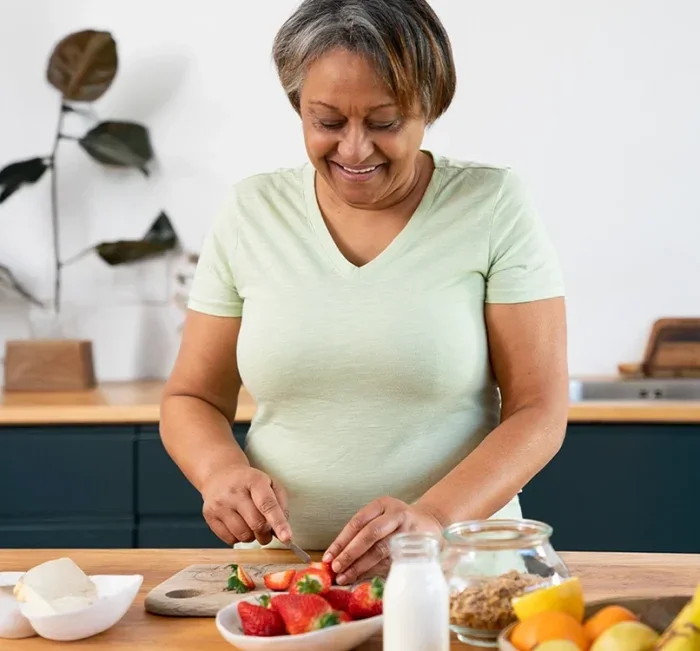
Why does blood sugar spike after eating?
Blood sugar spikes after eating because carbohydrates digest into glucose that enters the bloodstream faster than your cells can absorb it. When you eat, digestion breaks starches and sugars into glucose; the pancreas releases insulin, the hormone that ushers that glucose into cells for energy. Refined carbohydrates — white bread, pastries, sugary drinks — digest quickly, so glucose arrives in a sharp wave and, an hour or two later, drops in a matching crash. Whole foods carrying fibre, protein and fat digest slowly, so the same energy is released as a gentler, longer swell.
The size of the post-meal rise depends on more than the food alone. Portion size, how fast you eat, whether you moved recently, your sleep the night before and everyday stress all nudge the curve. That is encouraging, because every one of those is a lever you can pull — and the rest of this guide is about pulling them in the right order.
What is a normal blood sugar level after eating?
A normal post-meal blood sugar level is one that peaks modestly within an hour or two of eating and then settles back toward your fasting baseline. For people without diabetes the body handles this automatically, and exact numbers vary by individual, meal and testing method, which is why a single figure copied from the internet is a poor personal target. If you use a glucose meter or a continuous monitor, look at your own trend — how high the peak climbs and how quickly it returns — and discuss your targets with your doctor. The habits below are about making that curve gentler, not about chasing a specific number.

How do you steady blood sugar after meals, step by step?
You steady blood sugar after meals by combining a smarter eating order with movement and a few repeatable defaults, so the post-meal curve is softer before it even starts. Here are the highest-return habits, roughly in order of how quickly they help.
1. Eat in the right order: vegetables and protein before starch
Meal order is the single easiest change because it needs nothing new on the plate. Research on food sequencing suggests that eating vegetables and protein before the starchy portion of a meal leads to a noticeably lower glucose rise than eating the starch first. The fibre and protein slow gastric emptying, so the carbohydrate that follows is metered out rather than dumped in. Save the bread, rice or potato for last, and start with the salad, the vegetables and the protein. The crash on the other side of a spike is explained in what reactive low blood sugar is. A randomised cross-over study found that eating vegetables first, regardless of eating speed, significantly reduced postprandial blood glucose and insulin (Imai et al., Nutrients, 2023).
2. Take a 10-to-15-minute walk after your biggest meal
A short post-meal walk is the fastest lever you have, because working muscles pull glucose from the bloodstream most eagerly in the hour after eating. You do not need a workout — a gentle 10-to-15-minute walk after your largest meal is enough to noticeably soften the spike, and it doubles as digestion and stress relief. If a walk is not possible, even standing, light housework or a few flights of stairs helps more than sitting still.
3. Pair every carbohydrate with fibre, protein or fat
Pairing is meal order's everyday cousin: never send a fast carbohydrate in alone. An apple with a handful of almonds, toast with eggs, rice with beans and vegetables — the companion fibre, protein or fat blunts the rise the carbohydrate would cause by itself. Over a day this turns a series of spikes into a series of gentle swells.
4. Watch the drinks, especially the liquid sugar
Sugary drinks are the fastest route to a post-meal spike because the sugar is liquid, fibre-free and absorbed almost immediately. Swapping one sweet drink a day for water, sparkling water or unsweetened tea removes one of the sharpest spikes from your routine. Green tea is a useful default — it is a rich natural source of polyphenol antioxidants and adds nothing your body has to spike over.

5. Protect sleep and defuse stress before they widen the swing
Sleep and stress are the quiet influencers of blood sugar after eating. A short night raises stress hormones that can push the next day's post-meal readings higher, and chronic stress does the same through cortisol. Seven to nine hours of regular sleep and simple decompression — a walk, slow breathing, a few minutes outdoors — keep the after-meal curve from widening before you have eaten a bite.
See the exact dose in Glyvoryn →
What are the best meal-timing tips for post-meal glucose?
Meal timing shapes post-meal glucose as much as meal content, because your body handles the same food differently depending on when and how fast you eat it. A few timing habits carry most of the benefit.
| Meal-timing tip | Why it helps post-meal glucose | How to apply it |
|---|---|---|
| Front-load the day | The body often handles carbohydrates more efficiently earlier than late at night. | Make breakfast and lunch the larger meals; keep dinner lighter. |
| Slow the pace | Eating fast delivers glucose in a rush; slower eating meters it out. | Put the fork down between bites; aim for 20 minutes at the table. |
| Space your meals | Regular gaps avoid the grazing that keeps glucose elevated all day. | Leave roughly 4–5 hours between main meals; skip constant snacking. |
| Move within an hour | Muscle uptake of glucose is highest soon after eating. | Walk 10–15 minutes after your largest meal, not two hours later. |
| Anchor your supplement | A fixed daily time makes support a habit you actually keep. | Take Glyvoryn at the same moment each day — e.g. with breakfast. |
None of these ask you to eat less food or fewer carbohydrates — only to arrange them a little more thoughtfully. For a deeper look at the plate itself, our guide to the best foods to balance blood sugar pairs naturally with the timing tips here.
Where does Glyvoryn fit into a steady after-meal routine?
Glyvoryn fits as everyday support that runs quietly under your meal-order and movement habits, not as a treatment for any single meal or condition. It is a once-daily liquid dropper pairing chromium (as chromium picolinate), an essential trace mineral that contributes to normal macronutrient metabolism, with a 200 mg botanical blend of gymnema, maca, African mango, green tea and panax ginseng. Because it is taken once a day rather than at each meal, it is designed to support the routine as a whole, letting the food-order and walking habits do the meal-by-meal work.

It is worth being honest about the evidence. Chromium's role in normal macronutrient metabolism is recognised, and botanicals such as gymnema and green tea have long traditions and a growing but still mixed research base for everyday blood-sugar wellness. None of this makes any supplement a treatment, and the habits above — food order, movement, sleep — have the larger and better-documented effect on post-meal glucose. If you want to weigh the two headline botanicals in detail, read our explainer on chromium and gymnema for blood sugar.

Keep the routine going without running out
Botanical support builds gradually, so a multi-month supply keeps your daily dropper in place through the weeks it takes habits to settle. The six-bottle bundle is the best value at $49 per bottle, with free U.S. shipping and a 60-day guarantee.
Check today's Glyvoryn pricing — from $49/bottleWhich after-meal habits work fastest?
A "fast" after-meal habit is one you can feel on a single glucose reading the same day; a "slow" one reshapes your baseline over weeks. Both matter, and the fast ones are usually the easiest. This table sorts the core habits by how quickly they help and how much effort they ask. The underlying terms are defined in what blood sugar control actually means.
| Habit | Typical time to notice | Everyday effort |
|---|---|---|
| 10–15 min walk after the biggest meal | Same day | Low |
| Vegetables & protein before starch | Same meal | Low |
| Pair every carb with fibre/protein/fat | Same meal | Low |
| Swap one sugary drink for water/tea | Days | Low |
| Slower, spaced, front-loaded meals | Days to weeks | Medium |
| Regular sleep & stress routine | Weeks | Medium |
| Daily supplement support (e.g. Glyvoryn) | Weeks | Low |
Notice that most of the fast wins cost nothing and change no food — they are about order, pairing and a short walk. Layer the slower baseline habits on top, keep a daily support step consistent, and the trend does the rest. You can compare the packages and pricing or read the full Glyvoryn review for how the formula is built.
When should you talk to a doctor?
These after-meal habits are for supporting blood sugar that is already within a normal range; they are not a substitute for medical care. Speak with your doctor before making changes if you are pregnant or nursing, under 18, take any medication — especially glucose-lowering medicine — have a diagnosed condition such as diabetes, or notice persistent symptoms like excessive thirst, frequent urination, unexplained weight change or ongoing fatigue. A short conversation makes sure anything you add, supplements included, fits safely with your existing care.

Frequently asked questions
How do you steady blood sugar after meals?
Eat vegetables and protein before the starchy part of the meal, keep portions sensible, and take a 10-to-15-minute walk afterward. These meal-order and movement habits blunt the after-eating spike, and a steady daily routine keeps the effect going.
What is a normal blood sugar level after eating?
For people without diabetes, glucose typically peaks within an hour or two of eating and returns toward baseline afterward. Exact targets vary by person and lab, so use your own doctor's guidance rather than a single online figure.
Does walking after a meal lower blood sugar?
Yes. Working muscles pull glucose from the bloodstream most eagerly in the hour after eating, so even a short 10-to-15-minute walk after your largest meal is a simple, reliable way to soften a post-meal rise.
Why does my blood sugar spike after eating?
Carbohydrates digest into glucose that enters the bloodstream. Refined carbohydrates such as white bread and sugary drinks digest fast and spike sharply, while fibre, protein and fat slow digestion so the same energy arrives as a gentler wave.
Does the order you eat food in change your glucose?
Research on meal sequencing suggests eating vegetables and protein before the starchy portion leads to a noticeably lower rise in glucose than eating the starch first. It is a free habit that needs no change to what is on the plate.
Where does Glyvoryn fit into steadying blood sugar after meals?
Glyvoryn is a once-daily liquid dropper pairing chromium with a 200 mg botanical blend of gymnema, maca, African mango, green tea and panax ginseng. It is everyday support that complements meal-order and movement habits, not a treatment for any disease.
Try Glyvoryn risk-free for 60 days →
Glyvoryn is a dietary supplement, not a treatment for any medical condition. These statements have not been evaluated by the Food and Drug Administration. This product is not intended to diagnose, treat, cure or prevent any disease. Always consult a qualified healthcare professional about your individual needs.
References & further reading
- National Institutes of Health, Office of Dietary Supplements. Chromium — Fact Sheet for Health Professionals. ods.od.nih.gov/factsheets/Chromium-HealthProfessional
- National Center for Complementary and Integrative Health (NCCIH). Diabetes and Dietary Supplements. nccih.nih.gov/health/diabetes-and-dietary-supplements
- Mayo Clinic. Diabetes management: How lifestyle, daily routine affect blood sugar. mayoclinic.org/diseases-conditions/diabetes/in-depth/diabetes-management
- Examine.com. Gymnema sylvestre — evidence-based summary. examine.com/supplements/gymnema-sylvestre
- Shukla AP, et al. The impact of food order on postprandial glycaemic excursions in prediabetes. Diabetes, Obesity and Metabolism, 2019. PMID 30101510
- Imai S, et al. Eating vegetables first regardless of eating speed has a significant reducing effect on postprandial blood glucose and insulin in young healthy women: randomized controlled cross-over study. Nutrients, 2023. PMID 36904173
- Nygaard H, et al. Slow postmeal walking reduces postprandial glycemia in middle-aged women. Applied Physiology, Nutrition, and Metabolism, 2009. PMID 20029518
- Diekmann C, et al. Moderate postmeal walking has no beneficial effects over resting on postprandial lipemia, glycemia, insulinemia and selected oxidative and inflammatory parameters in older adults with a cardiovascular disease risk phenotype: a randomized crossover trial. Journal of Nutrition, 2019. PMID 31318033
These references describe the ingredients and habits in general terms and do not constitute evidence that any product treats, cures or prevents any condition.
Keep reading: the best foods to balance blood sugar · how to support healthy blood sugar naturally · back to the Glyvoryn blog · homepage.