Chromium picolinate in Glyvoryn: the dose & benefits

Updated September 2026 · reviewed by the Glyvoryn Research Team. We are an independent information resource, not a medical provider, and this article is educational rather than medical advice.
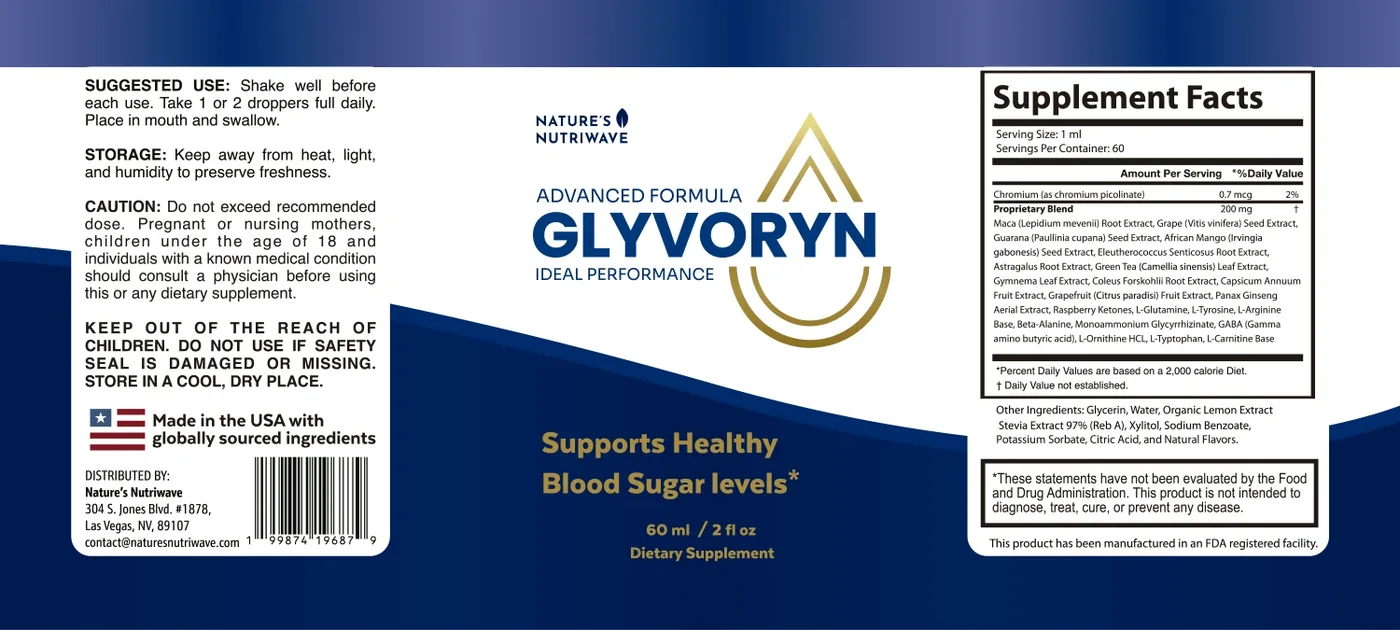
Chromium picolinate is the single quantified nutrient on the Glyvoryn label: each 1 ml serving delivers 0.7 mcg of chromium as chromium picolinate, roughly 2% of the Daily Value. Chromium is an essential trace mineral that contributes to normal macronutrient metabolism — the everyday processing of carbohydrates, fats and proteins — and the picolinate form was chosen because it is one of the more readily absorbed ways to deliver the mineral. This is nutritional support that sits beside a 200 mg botanical blend, not a treatment for any condition. The pooled picture comes from a systematic review and meta-analysis of randomised controlled trials of chromium supplementation and glycaemic control in type 2 diabetes (Asbaghi et al., Pharmacological Research, 2020).
The chromium picolinate dose in Glyvoryn, and what it is for.
- The dose
- 0.7 mcg of chromium (as chromium picolinate) per 1 ml serving — about 2% of the Daily Value, and the only quantified nutrient on the panel.
- Its role
- Chromium contributes to normal macronutrient metabolism: the body's routine handling of the sugars, fats and proteins in your diet.
- Why picolinate
- Chromium bound to picolinic acid is widely regarded as one of the more absorbable forms, which is why formulators commonly choose it.
- Honest limits
- The dose is conservative and complements a normal diet; chromium is not a treatment for blood sugar, diabetes or weight loss.
Every ingredient label tells a story. On Glyvoryn's panel, one line is written in exact numbers while the rest sit inside a proprietary blend — and that one line is chromium. This deep-dive explains what the 0.7 mcg figure means, why chromium earns a named spot, and how to read the dose honestly. For the wider picture, our full Glyvoryn review covers every ingredient. A separate systematic review and meta-analysis examined both the efficacy and the safety of chromium supplementation in diabetes (Suksomboon et al., Journal of Clinical Pharmacy and Therapeutics, 2014).
What is chromium picolinate, exactly?
Chromium picolinate is a compound in which the essential trace mineral chromium is bound to picolinic acid, an organic carrier that helps the mineral cross the intestinal wall. Trivalent chromium — the kind used in food and supplements — is a nutrient your body needs in tiny amounts, and picolinate is one delivery form of it. In Glyvoryn it is the mineral half of the formula, standing alongside the plant half: a 200 mg blend of gymnema, maca, African mango, green tea, panax ginseng and more.
The distinction matters because "chromium" on a label can mean several chemical forms — chloride, picolinate, nicotinate, or chromium-enriched yeast — and they are not absorbed equally. Choosing picolinate is a bioavailability decision, which we return to below.
What is the chromium picolinate dose in Glyvoryn?
The chromium picolinate dose in Glyvoryn is 0.7 mcg of elemental chromium per 1 ml serving, which the label lists as about 2% of the Daily Value. That is a deliberately modest amount: it is designed to top up the chromium you already get from food rather than flood the body with a mega-dose. Below is how that single number reads on the panel.
| Label detail | Value | What it means |
|---|---|---|
| Nutrient | Chromium (as chromium picolinate) | The only individually quantified nutrient on the panel. |
| Amount per serving | 0.7 mcg | Micrograms — a trace amount, as chromium is needed only in tiny quantities. |
| % Daily Value | ~2% | A conservative top-up meant to complement dietary chromium. |
| Serving size | 1 ml (dropper) | Liquid drops, taken once or twice daily. |
| Servings per bottle | 60 | A one-month supply at two droppers, longer at one. |
| Alongside | 200 mg botanical blend | Gymnema, maca, African mango, green tea, panax ginseng and more. |
For context, the U.S. Adequate Intake for chromium in adults is roughly 25–35 mcg per day, and most people meet it through ordinary food — whole grains, broccoli, meat and nuts all contribute. Glyvoryn's 0.7 mcg is therefore a supporting sliver: this is a botanical formula that includes a small, named dose of chromium, not a high-potency chromium pill. The mechanism the formula claims is unpacked in how Glyvoryn works.

What does chromium do for metabolism?
Chromium's recognized role is in normal macronutrient metabolism — the routine work of turning the carbohydrates, fats and proteins you eat into usable energy. This is the claim regulators in Europe permit for chromium: that it "contributes to normal macronutrient metabolism" as a nutrient function — a statement about everyday nutrition, not about treating illness.
Mechanistically, chromium is thought to support the action of insulin, the hormone that helps glucose move from the bloodstream into cells. Researchers now describe that role cautiously, but chromium's status as an essential trace element involved in carbohydrate and lipid handling is well established. What it is not is a lever you pull to force blood sugar down — a point the honest-limits section below makes clear.
Why does a trace mineral matter for blood sugar wellness?
A trace mineral matters because metabolism runs on a whole team of cofactors, and a shortfall in any one can leave the machinery working less smoothly. Chromium is one such cofactor. The logic for including it is not that a tiny dose transforms glucose control, but that an adequate supply of a nutrient tied to macronutrient metabolism removes one small variable while the botanicals and your diet do the heavier lifting.
Why did Glyvoryn choose chromium picolinate?
Glyvoryn uses chromium picolinate because it is one of the more readily absorbed forms of an otherwise poorly absorbed mineral. Chromium is hard for the gut to take up — absorption of inorganic chromium can sit in the low single-digit percentages — so binding it to picolinic acid is a practical way to improve how much actually gets in. That bioavailability is why picolinate is the most common form in supplements.

| Chromium form | Type | General absorption note |
|---|---|---|
| Chromium picolinate | Organic (picolinic acid) | Widely regarded as one of the more absorbable forms; the most common in supplements — the form Glyvoryn uses. |
| Chromium chloride | Inorganic salt | Generally lower absorption than organic forms. |
| Chromium nicotinate / polynicotinate | Bound to niacin | Another organic form used in some products. |
| Chromium-enriched yeast | Food-form | Chromium delivered in a yeast matrix; used in some formulas. |
The takeaway is not that picolinate is magic, but that if you include a named dose of chromium, choosing a well-absorbed form makes it count for more. Glyvoryn pairs that choice with liquid delivery. To see how the mineral works with the plant actives, read our companion piece on chromium and gymnema for blood sugar.

See the exact dose in Glyvoryn
Glyvoryn pairs 0.7 mcg of chromium picolinate with a 200 mg botanical blend in a once-daily dropper. The six-bottle bundle is the best value at $49 per bottle, with free U.S. shipping and a 60-day guarantee.
Order Glyvoryn — from $49/bottleHow does the dose compare to typical chromium supplements?
Standalone chromium picolinate products are usually dosed in the hundreds of micrograms, so Glyvoryn's 0.7 mcg is far smaller by design. A dedicated chromium tablet aims to be your primary chromium source, while Glyvoryn treats the mineral as a named cofactor supporting a botanical-led formula — two approaches built for different jobs.
Higher chromium doses in the 200–1,000 mcg range are the ones most studied for metabolic outcomes, and even those show mixed, modest results. A 0.7 mcg serving is nutritional support, not a research-grade metabolic dose, and Glyvoryn's value rests on the combination of chromium with its botanicals plus your own diet and activity. For how food fits in, see the best foods to balance blood sugar.
What are the honest limits and safety notes?
The honest limit is that chromium is not a treatment. Systematic reviews of chromium for glucose control and for weight loss find no consistent, clinically meaningful benefit in people who are not deficient, and health authorities call the evidence weak or inconclusive. Chromium's defensible role is the nutritional one — contributing to normal macronutrient metabolism — and that is how Glyvoryn frames it. Any claim that a chromium supplement lowers blood sugar, reverses diabetes or melts fat overstates the science. A Cochrane review of chromium picolinate in overweight and obese adults is the standard reference for the safety question (Tian et al., Cochrane Database of Systematic Reviews, 2013).
Who should check with a doctor first?
Anyone taking glucose-lowering medication should speak with a doctor before adding chromium, because the combination could in principle push blood sugar lower than intended. The same caution applies if you are pregnant or nursing, under 18, have kidney or liver concerns, or take other prescription medicines. Trivalent chromium from food and supplements is generally considered to have low toxicity at normal intakes, but personalized advice matters whenever medication is involved.

How does chromium fit into the whole Glyvoryn formula?
Chromium is the quantified anchor of a formula whose character comes mostly from its plants. The 200 mg botanical blend leads with gymnema leaf — the Ayurvedic "sugar destroyer" — alongside maca root, African mango, green tea polyphenols and panax ginseng, each traditionally tied to everyday metabolic wellness. Chromium covers the mineral-cofactor angle that plants do not: a named, well-absorbed trace element tied to macronutrient metabolism.
Think of it as a division of labour: your diet and movement do the most, the botanicals add traditional support, and chromium picolinate rounds out the nutritional base. Taken as directed — one or two droppers daily, shaken and swallowed — it is a simple once-a-day step. For the full ingredient list, see the ingredients section or our guide to supporting healthy blood sugar naturally.
Frequently asked questions
What is the chromium picolinate dose in Glyvoryn?
Each 1 ml serving of Glyvoryn supplies 0.7 mcg of chromium as chromium picolinate, which is about 2% of the Daily Value. It is the single quantified nutrient on the panel, sitting alongside a 200 mg proprietary botanical blend.
What does chromium picolinate do in the body?
Chromium is an essential trace mineral that contributes to normal macronutrient metabolism, meaning the everyday processing of carbohydrates, fats and proteins. It supports the body's own handling of dietary energy rather than treating any disease.
Why is chromium picolinate used instead of another form?
Picolinate is an organic form in which chromium is bound to picolinic acid, and it is widely regarded as one of the more readily absorbed chromium forms. That absorption is why formulators, including Glyvoryn, commonly choose it over plain chromium salts.
Is 0.7 mcg of chromium a meaningful amount?
It is a small, conservative amount, about 2% of the Daily Value, meant to complement the chromium you already get from food rather than deliver a mega-dose. Most dietary chromium comes from a normal diet, and Glyvoryn positions the mineral as one supporting piece beside its botanical blend.
Can I take chromium picolinate with blood-sugar medication?
Talk to your doctor first. Chromium can interact with glucose-lowering medicines and some other drugs, so anyone taking medication, pregnant, nursing or under 18 should get personalized advice before adding a chromium supplement.
Does chromium picolinate cause weight loss or lower blood sugar?
The evidence is mixed and modest. Chromium's recognized role is in normal macronutrient metabolism, not weight loss or glucose reduction, and reviews find no consistent, clinically meaningful effect on either in people without a deficiency. Treat it as nutritional support, not a treatment.
Check today's Glyvoryn pricing →
Glyvoryn is a dietary supplement, not a treatment for any medical condition. These statements have not been evaluated by the Food and Drug Administration. This product is not intended to diagnose, treat, cure or prevent any disease. Always consult a qualified healthcare professional about your individual needs.
References & further reading
- National Institutes of Health, Office of Dietary Supplements. Chromium — Fact Sheet for Health Professionals. ods.od.nih.gov/factsheets/Chromium-HealthProfessional
- National Center for Complementary and Integrative Health (NCCIH). Chromium. ods.od.nih.gov/factsheets/Chromium-HealthProfessional
- National Center for Complementary and Integrative Health (NCCIH). Diabetes and Dietary Supplements. nccih.nih.gov/health/diabetes-and-dietary-supplements
- Examine.com. Chromium — evidence-based summary. examine.com/supplements/chromium
- Mayo Clinic. Chromium — drugs and supplements overview. mayoclinic.org/drugs-supplements-chromium
- Asbaghi O, et al. Effects of chromium supplementation on glycemic control in patients with type 2 diabetes: a systematic review and meta-analysis of randomized controlled trials. Pharmacological Research, 2020. PMID 32730903
- Tian H, et al. Chromium picolinate supplementation for overweight or obese adults. Cochrane Database of Systematic Reviews, 2013. PMID 24293292
- Suksomboon N, et al. Systematic review and meta-analysis of the efficacy and safety of chromium supplementation in diabetes. Journal of Clinical Pharmacy and Therapeutics, 2014. PMID 24635480
These references describe chromium and its forms in general terms and do not constitute evidence that any product treats, cures or prevents any condition.
Keep reading: how chromium and gymnema work together · the best foods to balance blood sugar · support blood sugar naturally · back to the Glyvoryn blog · homepage.