Do blood sugar supplements really work? An honest look at Glyvoryn

Updated September 2026 · reviewed by the Glyvoryn Research Team. We are an independent information resource, not a medical provider, and this article is educational rather than medical advice.
Do blood sugar supplements really work? The honest answer is that a good one can offer gentle, supportive help as part of a healthy diet and active routine — but it is not a treatment, and it will not lower glucose the way medication does. The ingredients most worth discussing, like chromium and gymnema, play a quiet background role in normal metabolism, while the real heavy lifting still comes from food, movement and sleep. This myth-check separates what these products can plausibly do from the claims that get oversold. Chromium is the worked example: a systematic review and meta-analysis examined its efficacy and safety in diabetes and found the effect modest (Suksomboon et al., Journal of Clinical Pharmacy and Therapeutics, 2014).
What blood sugar supplements can and cannot do, honestly.
- Can they help?
- Modestly and gradually, as support for glucose already within a normal range — not as a cure or a replacement for diet, exercise or medical care.
- What they cannot do
- They do not lower blood sugar like a drug, undo a high-sugar diet, or treat, cure or prevent any disease.
- The realistic timeframe
- Botanicals build slowly, so expect gentle support over several weeks, with results that vary from person to person.
- Where Glyvoryn fits
- As everyday support paired with fibre-rich meals and a post-meal walk — the supplement is the smallest part of the routine, not the whole of it.
Search “blood sugar supplement” and you meet two extremes: miracle-drop sales pages and skeptics who say nothing in a bottle does anything. The truth sits in the calmer middle. Below we walk the common myths, what the evidence supports, and how a formula like Glyvoryn is meant to fit — as everyday support, not a shortcut. The single most useful summary is an overview of meta-analyses of clinical trials of medicinal plants for glycaemic control in type 2 diabetes (Willcox et al., Frontiers in Pharmacology, 2021).
What can a blood sugar supplement actually do?
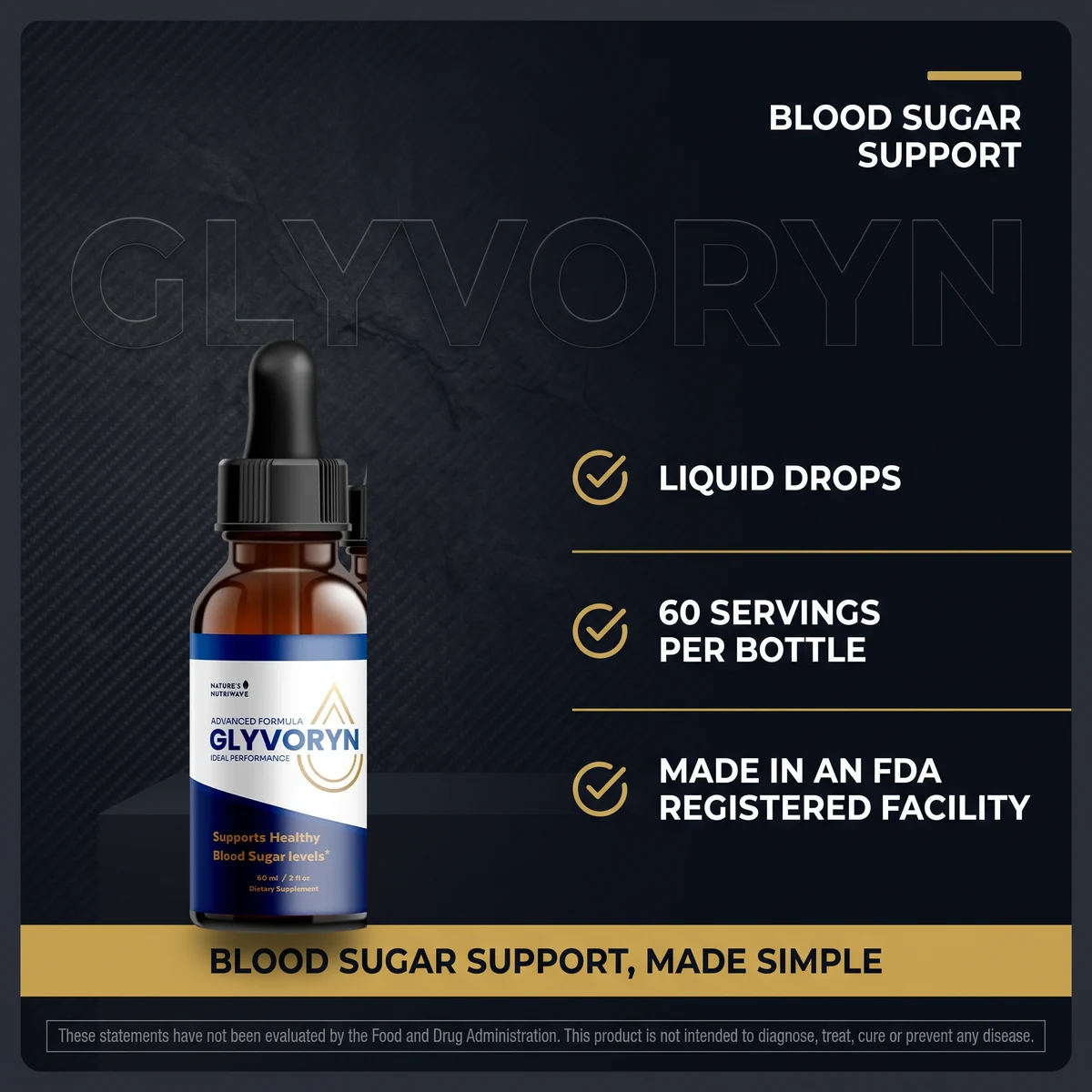
A blood sugar supplement is a food product that supplies nutrients playing a role in normal glucose metabolism — it supports a healthy lifestyle rather than replacing one. Chromium contributes to the everyday processing of carbohydrates, while fibre-rich botanicals like African mango or gymnema have long been part of blood-sugar wellness traditions. What none of them do is act like a medicine: they do not force glucose down, override a refined-carb meal, or treat any diagnosed condition. When a supplement is honest, it describes support for blood sugar already within a normal range — and that phrasing is a feature, not a dodge.
Why do blood sugar supplements get oversold?
Supplements get oversold because marketing rewards the biggest promise, not the most accurate one. A modest, traditional-use ingredient is easy to dress up as a “breakthrough.” Recognising the common myths is the fastest way to read labels with clearer eyes.
Myth 1: “A supplement can replace diet and exercise”
No supplement outperforms the fundamentals, and any product implying otherwise is overreaching. Fibre, whole foods, protein at meals, a post-meal walk and regular sleep move the needle far more than any capsule. A supplement is the seasoning, not the meal — useful on top of the basics, hollow without them.
Myth 2: “Natural means it works instantly”
Botanical ingredients tend to work gradually, not overnight, which is the opposite of how they are often advertised. A herb or trace mineral is a slow, cumulative kind of support. Expecting a dramatic next-morning change sets you up to feel let down by something meant to help quietly over weeks. Whether that adds up to a category leader is weighed in is Glyvoryn the best blood sugar supplement.
Myth 3: “If some is good, more is better”
More is not automatically better, and with minerals it can be worse. Nutrients like chromium have sensible upper ranges, and megadosing offers no bonus while raising the odds of unwanted effects. A well-formulated product uses studied amounts, not the biggest number on the label.
See the exact dose in Glyvoryn →
What does the evidence really say?
The honest summary is that the evidence for blood-sugar supplements is mixed and mostly modest, strongest for a few well-studied nutrients and weakest for miracle-style claims. Health authorities such as the NIH and NCCIH agree on one point: no dietary supplement is a proven substitute for standard care, and anyone on glucose-lowering medication should ask a doctor first, because effects can stack. Within those guardrails, a handful of ingredients keep coming up — note how carefully the “what it is reasonable to say” column is worded.
| Ingredient | Strength of evidence | What it is reasonable to say |
|---|---|---|
| Chromium | Established nutrient role | An essential trace mineral that contributes to normal macronutrient metabolism; useful mainly where intake is low. |
| Gymnema | Traditional use, some study | The Ayurvedic “sugar destroyer,” one of the more researched herbs in blood-sugar wellness; promising but not conclusive. |
| Green tea | General metabolic interest | A rich source of polyphenol antioxidants studied for overall metabolic wellness, not a glucose treatment. |
| African mango | Limited, early evidence | A fibre-rich West African seed popular in metabolism formulas; supportive role, small studies. |
| Panax ginseng | Traditional adaptogen | A storied tonic for resilience and everyday energy; evidence is preliminary and varied. |
The pattern is clear: real but modest — which is why credible labels talk about support, not treatment. For a closer look, see our comparison of gymnema versus berberine or the deep dive on chromium and gymnema for blood sugar.
How should you set realistic expectations?
Setting realistic expectations means treating a supplement as gentle, gradual support measured over weeks, not a switch that resets your numbers overnight. Three principles keep expectations grounded: botanicals build slowly, results vary between people, and the product only works as well as the routine around it.
| The oversold claim | The realistic version |
|---|---|
| “Melts away blood sugar overnight” | Offers slow, supportive help over several weeks, if any. |
| “Works no matter what you eat” | Works best alongside fibre-rich, whole-food meals. |
| “Replaces your medication” | Never replaces medication; talk to a doctor first. |
| “Guaranteed results for everyone” | Individual results vary; some feel more than others. |
| “A cure for diabetes” | Not a cure, treatment or preventive for any disease. |
Read that way, a supplement stops being a disappointment and becomes a sensible, low-drama part of a bigger plan. For the full lifestyle side, our guide to supporting healthy blood sugar naturally lays out the habits that matter most.
Support, not a shortcut
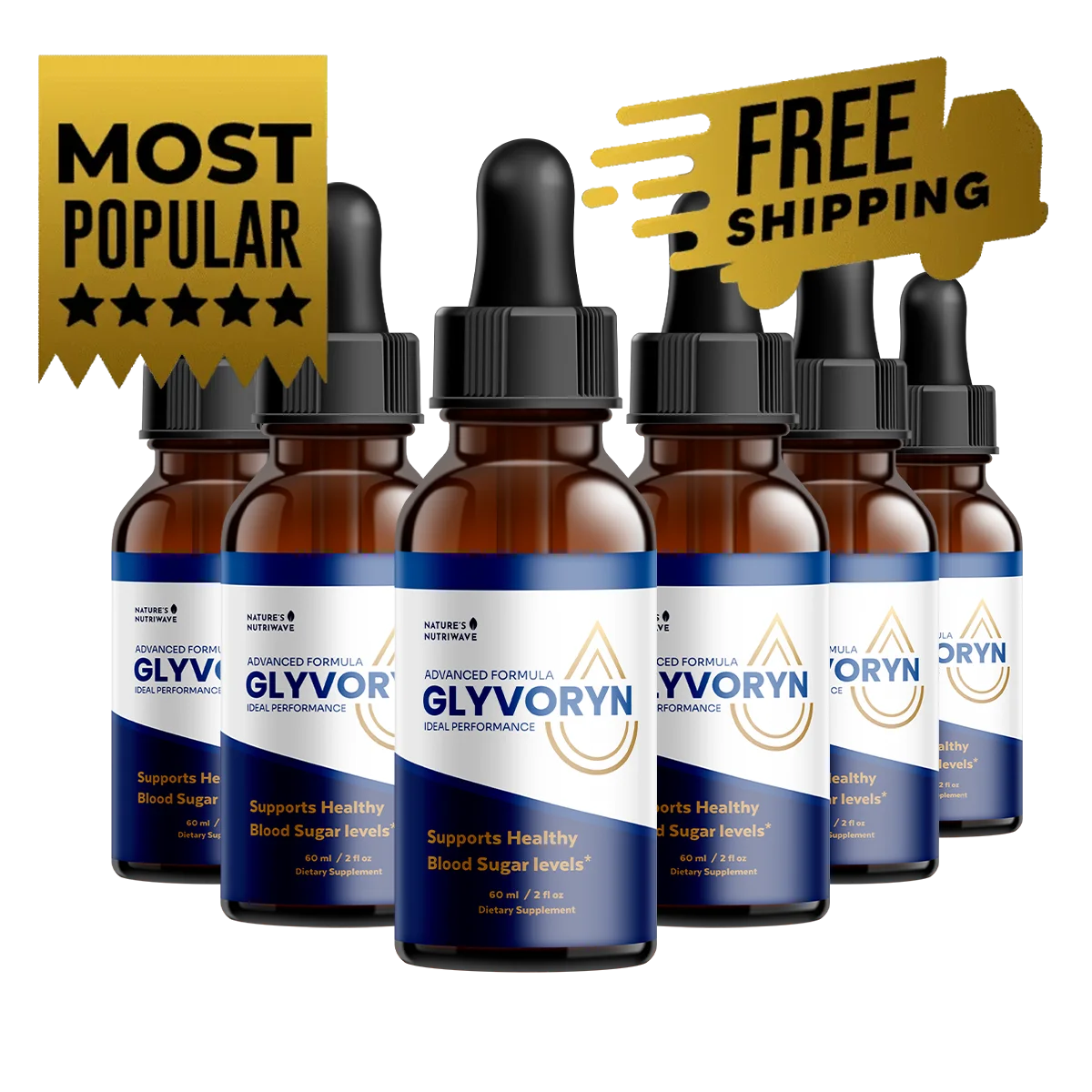
Glyvoryn is a once-daily dropper pairing chromium with a 200 mg botanical blend — built as everyday support, not a cure. The six-bottle bundle is the best value at $49 per bottle, with free U.S. shipping and a 60-day guarantee.
Check today's Glyvoryn pricing — from $49/bottleWhere does Glyvoryn fit into a realistic plan?
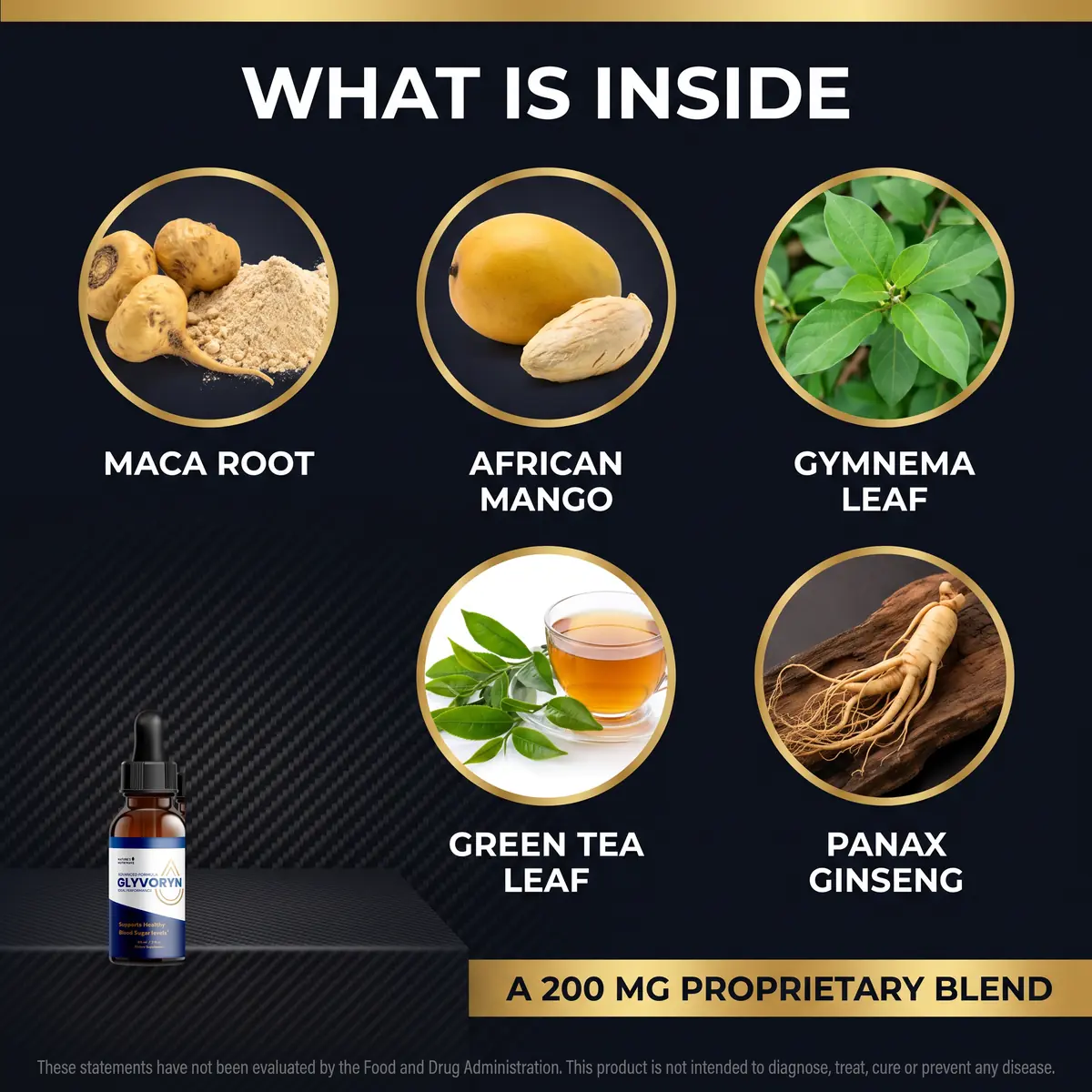
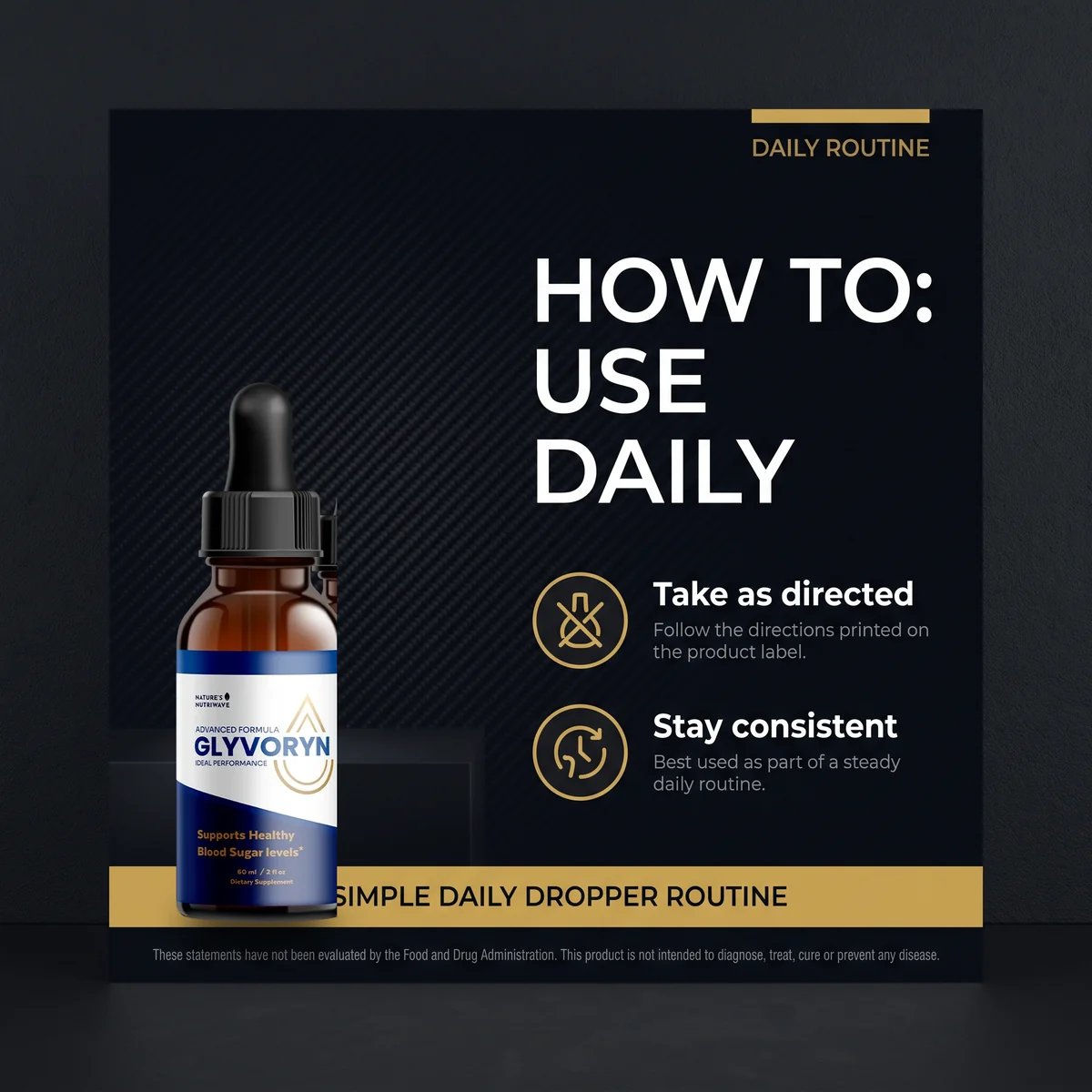
Glyvoryn is a dietary supplement for everyday blood-sugar wellness, not a drug and not a promise — it is designed to sit inside a healthy routine, not to carry it. It pairs chromium (as chromium picolinate) with a 200 mg botanical blend of gymnema, maca, African mango, green tea and panax ginseng, as fast liquid drops rather than a pill. The framing is deliberate: it supports blood sugar already within a normal range and is meant to be the smallest, most convenient part of a plan whose backbone is diet, movement and sleep. Used that way — one or two droppers each morning, alongside fibre-rich meals and a walk after your largest one — it is a modest habit with realistic aims. How that market is governed is set out in an overview of herb and dietary supplement efficacy, safety and United States regulation (Brown, Food and Chemical Toxicology, 2017).
How do you judge whether a glucose supplement is legitimate?
A legitimate glucose supplement is transparent about its ingredients, honest in its language, and clear that it is not a treatment. Before you trust any product — ours included — run it through a short checklist:
- Named, dosed ingredients rather than a mystery “proprietary blend” that hides how much of anything you get.
- Realistic language — “supports blood sugar already in a normal range,” not “cures” or “reverses” anything.
- Sound manufacturing — made in a facility that follows recognised quality standards.
- A clear guarantee so you can stop with a refund if it does not suit you.
- A doctor prompt for anyone pregnant, under 18, or taking medication — especially glucose-lowering medication.
If a product fails these — cure claims, hidden doses, no returns — walk away. See how Glyvoryn measures up in the full Glyvoryn review, or weigh format with our take on liquid versus pill blood sugar support.
When should you talk to a doctor?
Supplements support blood sugar already within a normal range; they are not a replacement for medical care, and some situations call for a professional first. Speak with your doctor before adding any glucose supplement if you are pregnant or nursing, under 18, take medication — particularly glucose-lowering medicine, where effects can add up — have a diagnosed condition, or notice persistent symptoms such as excessive thirst, frequent urination, unexplained weight change or ongoing fatigue.
Frequently asked questions
Do blood sugar supplements really work?
They can offer modest, supportive help as part of a healthy diet and active routine, but they are not a treatment or a substitute for one. Well-studied nutrients such as chromium and gymnema play a background role in normal metabolism; the biggest levers remain food, movement and sleep.
Can a supplement lower blood sugar on its own?
No single supplement lowers blood sugar the way medication does, and none should be used that way. In an already-healthy range, ingredients like chromium contribute to normal macronutrient metabolism, but they work best alongside fibre-rich meals, post-meal walks and consistent sleep.
What is a realistic expectation for a glucose supplement?
A realistic expectation is gentle, gradual support felt over weeks, not a dramatic overnight change. Botanicals build slowly, benefits vary from person to person, and any product works only as well as the diet and activity around it.
Why are blood sugar supplements so often oversold?
Marketing rewards big claims, so traditional-use ingredients get dressed up as cures. Honest labelling describes support for blood sugar already within a normal range, avoids disease claims, and points you toward diet and exercise as the foundation.
How do I judge whether a blood sugar supplement is legitimate?
Look for transparent, dosed ingredients rather than proprietary-blend mystery, realistic language instead of cure claims, third-party manufacturing standards, a clear return policy, and a recommendation to consult a doctor if you take medication.
Is Glyvoryn a cure or treatment for diabetes?
No. Glyvoryn is a dietary supplement for everyday blood-sugar wellness, not a drug, and it is not intended to diagnose, treat, cure or prevent any disease. Anyone with a diagnosed condition or on glucose-lowering medication should speak with a doctor before adding it.
See the exact dose in Glyvoryn — try it risk-free for 60 days →
Glyvoryn is a dietary supplement, not a treatment for any medical condition. These statements have not been evaluated by the Food and Drug Administration. This product is not intended to diagnose, treat, cure or prevent any disease. Always consult a qualified healthcare professional about your individual needs.
References & further reading
- National Center for Complementary and Integrative Health (NCCIH). Diabetes and Dietary Supplements. nccih.nih.gov/health/diabetes-and-dietary-supplements
- National Institutes of Health, Office of Dietary Supplements. Chromium — Fact Sheet for Health Professionals. ods.od.nih.gov/factsheets/Chromium-HealthProfessional
- National Center for Complementary and Integrative Health (NCCIH). Green Tea. nccih.nih.gov/health/green-tea
- Examine.com. Gymnema sylvestre — evidence-based summary. examine.com/supplements/gymnema-sylvestre
- Mayo Clinic. Diabetes treatment: Can cinnamon lower blood sugar? mayoclinic.org/diseases-conditions/diabetes/expert-answers/diabetes/faq-20058472
- Willcox ML, et al. Effectiveness of medicinal plants for glycaemic control in type 2 diabetes: an overview of meta-analyses of clinical trials. Frontiers in Pharmacology, 2021. PMID 34899340
- Brown AC. An overview of herb and dietary supplement efficacy, safety and government regulations in the United States with suggested improvements. Part 1 of 5 series. Food and Chemical Toxicology, 2017. PMID 27818322
- Suksomboon N, et al. Systematic review and meta-analysis of the efficacy and safety of chromium supplementation in diabetes. Journal of Clinical Pharmacy and Therapeutics, 2014. PMID 24635480
These references describe the ingredients and habits in general terms and do not constitute evidence that any product treats, cures or prevents any condition.
Keep reading: how to support healthy blood sugar naturally · liquid vs pill blood sugar support · back to the Glyvoryn blog · homepage.